Khodal Tech Logo

KHODAL TECH

Automation vs Manual Work — The Operational Shift logo

Automation vs Manual Work — The Operational Shift

Analyzing the cost, efficiency, and cultural impacts of shifting traditional pipelines to automated processes.

By KhodalTech Team2026-04-296 min read
Introduction illustration 1

Introduction

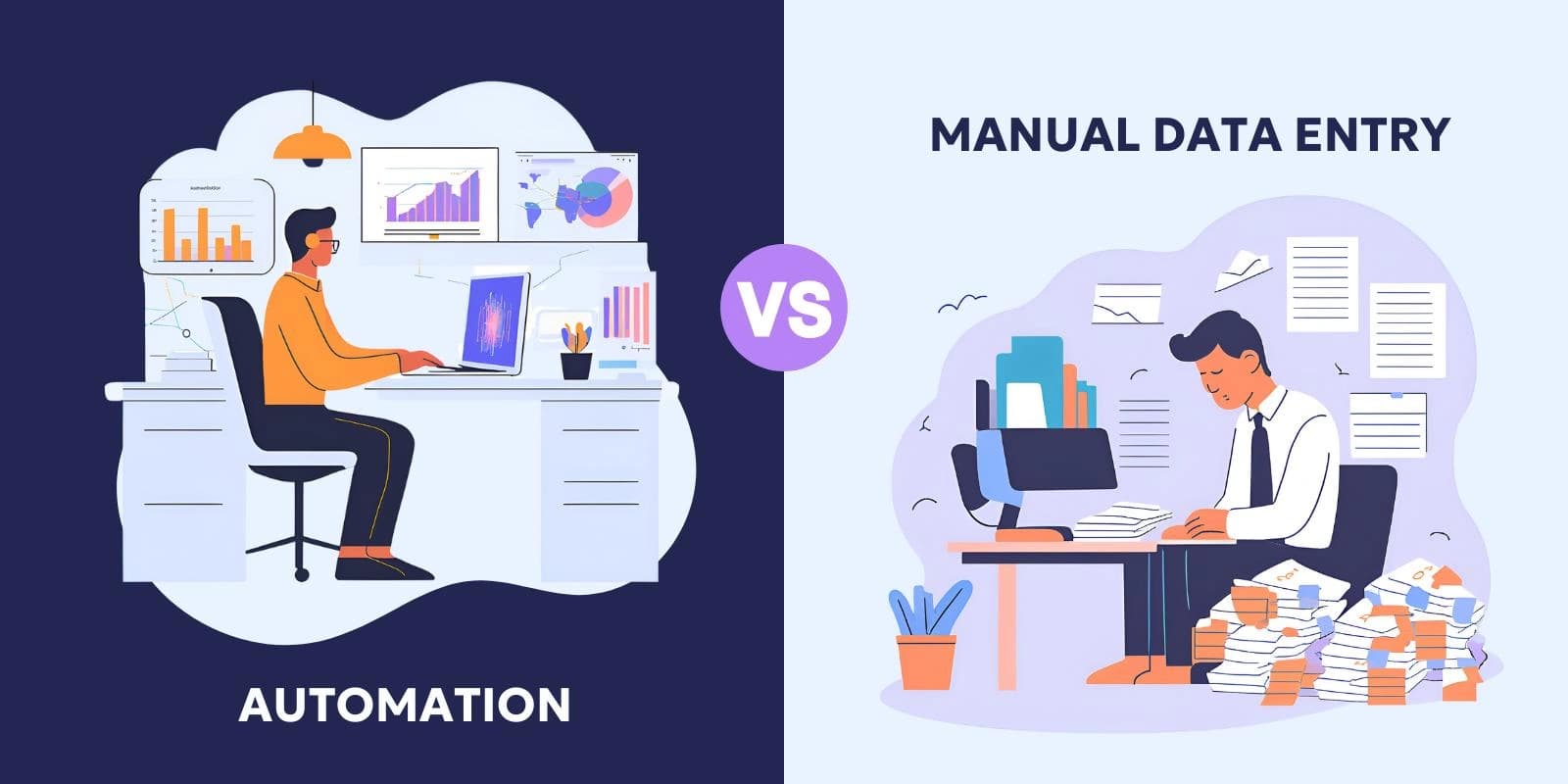
Modern operational frameworks are locked in a constant battle: executing tasks manually for ultimate control versus automating them for unprecedented scalability. This study evaluates how modern firms balance both methods.

  • Manual work guarantees bespoke accuracy.
  • Automation eliminates repetitive bottlenecks.
  • Striking the right balance improves bottom lines.

What is Automation vs Manual?

Automation involves utilizing scripts, API pipelines, and AI to carry out routine work with zero human intervention. Manual work requires cognitive oversight and direct execution for every distinct action.

Where is it used?

  • Quality Assurance: Running automatic unit tests vs. exploratory manual QA.
  • Customer Support: Chatbot screening vs. live specialist interactions.
  • Data Entry: OCR processing vs. manual typing.
  • Email Marketing: Automated drip campaigns vs. curated one-off sends.
  • Logistics: Managing automated route optimization vs. static dispatcher dispatching.
  • Payroll Processing: Software tax computation vs. manual ledger entries.
  • IT Operations: Continuous deployment scripts vs. server management updates.
Why should we use it? illustration 1

Why should we use it?

  • Scalability: Software can execute millions of jobs simultaneously.
  • Error Reduction: Algorithms do not tire and eliminate typos.
  • High RoI: Shifts payroll from rote tasks to high-level creativity.
  • Standardization: Preserves rigid policy enforcement across logs.

Is it useful or not?

Automation is extremely useful for heavy volume jobs, but can be disastrous if poorly written. Manual oversight remains critically useful for edge cases, subjective design, and building genuine customer empathy.

How is it different?

  • Speed: Automated tools process datasets up to 1000x faster.
  • Flexibility: Humans pivot to unexpected scenarios effortlessly.
  • Fatigue: Code runs 24/7 without lowering accuracy.
  • Contextual Nuance: Manual reviewers catch abstract inconsistencies.
Strategic Roadmap illustration 1

Strategic Roadmap

Transitioning successfully demands iterative auditing to protect active business cycles effectively.

  • Incremental pilot testing strategies.
  • Thorough baseline tracking thresholds.
  • Fallback rollback contingency mechanisms.

Cultural Optimization

Reassuring internal workgroups ensures safe adoption thresholds without internal friction.

  • Targeted skill enablement classes.
  • Collaborative operational reviews.
  • Open transparent communication structures.
"Automate the repeatable; humanize the exceptional. A blended ecosystem provides high scalability without forfeiting high-quality experiences."